
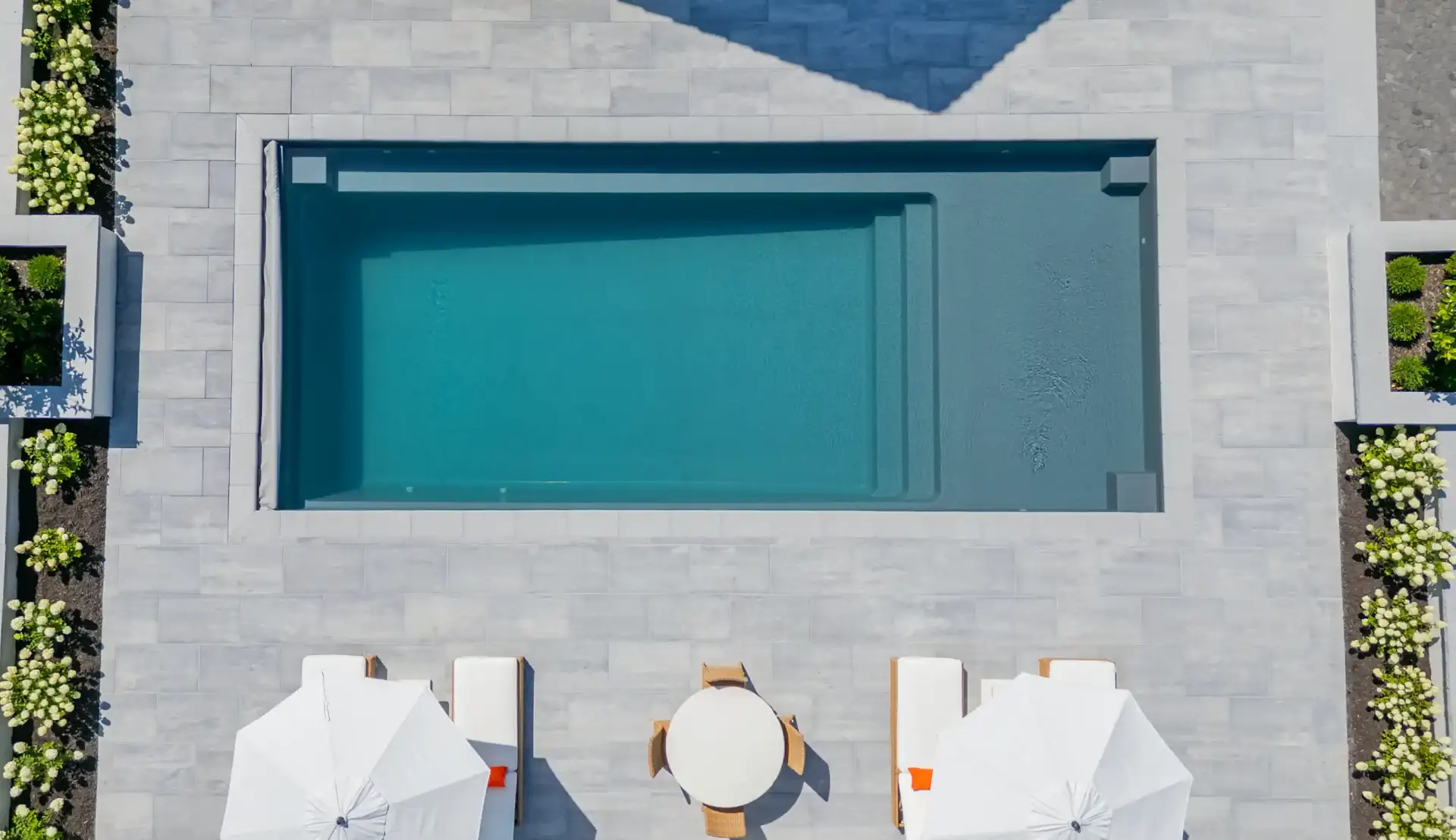
A backyard pool is only as good as the thought that went into designing it. The right features transform a pool from a place to swim into a complete outdoor living environment that works beautifully for your specific lifestyle, family and property. The wrong features (or the absence of features you later wish you’d included) become a source of regret that’s expensive to remedy after the fact. Aviva Pools combines premium triple-layer construction with an extensive collection of integrated features designed to create pools that reflect how you truly want to live outdoors.
Whether you’re designing your first pool or upgrading an existing installation, every excellent pool project starts with understanding what’s available and what each feature contributes to the ownership experience.
This pool features guide covers every major pool feature category worth considering, what each deliver and how to think through which combinations make sense for your lifestyle.
Why Pool Features Deserve Serious Upfront Attention
Pool features aren’t accessories you add after the fact. Most of the features that make pools truly exceptional are structural, built into the pool shell during manufacturing or integrated during installation. Changing them later ranges from difficult to impossible.
A tanning ledge, for example, is part of the pool’s molded structure. Built-in bench seating is formed into the shell. Entry configurations are designed in from the beginning. Deciding you want a swim-up bar or an integrated spa after installation typically means starting over rather than adding on.
The time to make feature decisions is during design, when every option is available and adding features costs a fraction of what retrofit work would require. Understanding each feature thoroughly before that conversation lets you decide confidently instead of relying entirely on your builder’s suggestions.
What Is a Tanning Ledge and Do You Need One?
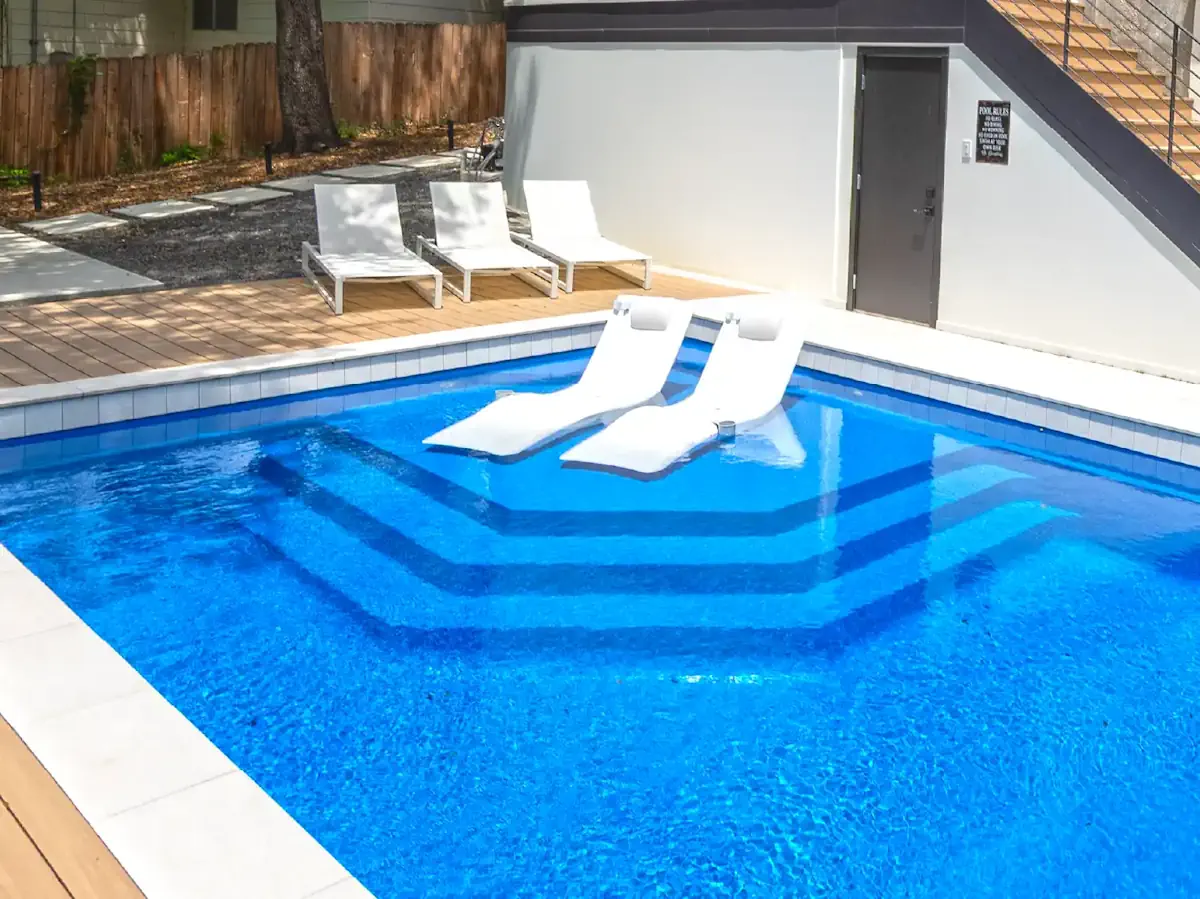
A tanning ledge, also called a Baja shelf or sun shelf, is one of the most popular and genuinely useful features available in modern fiberglass pool design. It’s a broad, flat shallow platform, which is typically six to twelve inches deep, extends from the pool’s edge into the water.
What tanning ledges actually deliver in practice:
Adults use them for lounging in shallow water with outdoor furniture specifically designed for in-pool placement. Chaise lounges that sit partially submerged let you stay cool on hot days without fully swimming. Parents with young children value tanning ledges as supervised shallow play areas where small children can splash safely while adults maintain easy visual contact. Pets often use tanning ledges comfortably for pool access.
The depth matters. A six-inch tanning ledge stays cool without being deep enough to present concerns for very young children who aren’t walking steadily yet. A twelve-inch depth accommodates more adults and furniture styles. Your builder can help match the depth to your anticipated use.
Aviva Pools’ tanning ledge designs integrate seamlessly into the pool’s overall aesthetic rather than appearing as afterthoughts. When you see a tanning ledge that looks like it belongs rather than one that was added, you’re seeing design quality in the manufacturing.
What Types of Built-In Seating Are Available?
Built-in bench seating is one of those features that owners consistently say they use more than expected. It creates natural gathering spots within the pool itself —places where adults can sit comfortably in the water and talk while children swim around them.
Several configurations are worth understanding:
Bench seating runs along one or more pool walls at a sitting depth, typically allowing adults to sit with water at chest level. This is comfortable for extended periods in the pool without treading water or holding onto the wall.
Corner seating takes advantage of pool geometry to create defined seating areas that feel more intentional than perimeter benches. A curved corner seat in a freeform design often becomes the natural gathering point during social use.
Swim-up seating is a step up from simple bench seating, incorporating bar-height ledges or dedicated seating areas adjacent to elevated deck space. These configurations work particularly well when entertaining and create that resort-style atmosphere that many homeowners are seeking.
The depth and positioning of built-in seating affect how usable it is. Seating positioned too deep becomes uncomfortable. Seating without appropriate sun exposure gets cold earlier in the day. These details are worth discussing carefully with your Aviva Pools’ dealer during design.
AT A GLANCE
- Prioritize Structural Features Upfront: Essential features like tanning ledges, built-in bench seating, entry steps, and integrated spas are molded directly into fiberglass pool shells during manufacturing and cannot be retrofitted later.
- Functional Pool Built-ins: Tanning Ledges & Splash Pads: Offer shallow platforms ($6–12\text$) ideal for submerged lounging, child play, and pet access. Seating & Entry Steps: Built-in benches, corner seats, and swim-up bars create natural socializing areas, while full-side or corner steps improve accessibility and safety.
- Ambiance & Aesthetics:Water Features: Waterfalls, deck jets, bubblers, and scuppers add movement, visual interest, and privacy by masking noise. Shell Color & Lighting: Pool shell color dictates water tone (ranging from tropical turquoise to dark lagoon), while customizable LED lighting enhances nighttime aesthetics and energy efficiency.
- Systems & Operational Features:Automation: Consolidates pool pumps, lighting, heating, and chemical monitoring into a single smart interface or app. Heating Options: Gas heaters provide fast, short-notice heating, while heat pumps offer energy-efficient background warming in moderate temperatures.
- Decision Framework: Choose features based on current and future lifestyle needs (e.g., entertaining vs. exercise), long-term safety, maintenance tolerance, and budget.
How Should You Think About Pool Entry and Steps?
How you enter and exit the pool affects safety, accessibility and the overall aesthetic of the installation. This is a feature category that many homeowners underestimate until they’ve lived with their pool for a season.
Standard step configurations: Corner entry steps are the traditional approach and consist of a set of steps in one corner of the pool that provide simple, safe access. These work well for most applications and create a defined entry point that’s easy to supervise.
Side entry with benching: Steps along a full side of the pool that double as seating. This configuration combines accessibility with the functionality of built-in bench seating and works well in pools where the layout allows for it.
Safety considerations matter significantly in entry design. Self-closing, self-latching gates on barrier systems and entry configurations that are easy to monitor from typical outdoor seating positions both deserve attention during design.
Splash pad: A shallow ledge near the entry that holds just a few inches of water, giving young children a safe place to play and adults a comfortable spot to lounge while easing into the pool.
What Water Features Add to the Pool Experience?
Water features add personality to pools and create the sensory experience that distinguishes a great pool from a good one. They range from purely aesthetic to genuinely functional.
Waterfalls
Waterfalls create both visual and auditory ambiance that transforms the outdoor environment. The sound of moving water contributes to a sense of privacy, creates a relaxing atmosphere and masks ambient noise from surrounding properties. Waterfalls come in several configurations: natural rock formations built into surrounding hardscape, deck spillovers that create sheet waterfalls from the pool surround and integrated scuppers built into raised bond beams.
The scale matters enormously. An undersized waterfall can look tentative. An oversized one can dominate and create excessive splashing in the pool. Your dealer can help size a waterfall that fits the pool’s scale and the surrounding landscape.
Deck Jets and Bubblers
Deck jets arc streams of water from the surrounding deck surface into the pool. They add visual energy and movement without the space requirements of a waterfall, work well in more geometric, contemporary pool designs and are popular features for pools intended for family use where children will enjoy playing with the water arcs.
Bubblers are installed in the tanning ledge floor, creating gentle fountains of water that bubble up from the ledge surface. They add movement and visual interest to the tanning ledge area and are consistently popular with young children.
Scuppers and Sheet Falls
Scuppers are spouts mounted in raised walls adjacent to the pool that create sheet falls into the water. They work particularly well with contemporary architectural design and create a formal, elegant visual effect that suits certain aesthetic directions very well.
Should You Add an Integrated Spa to Your Pool?
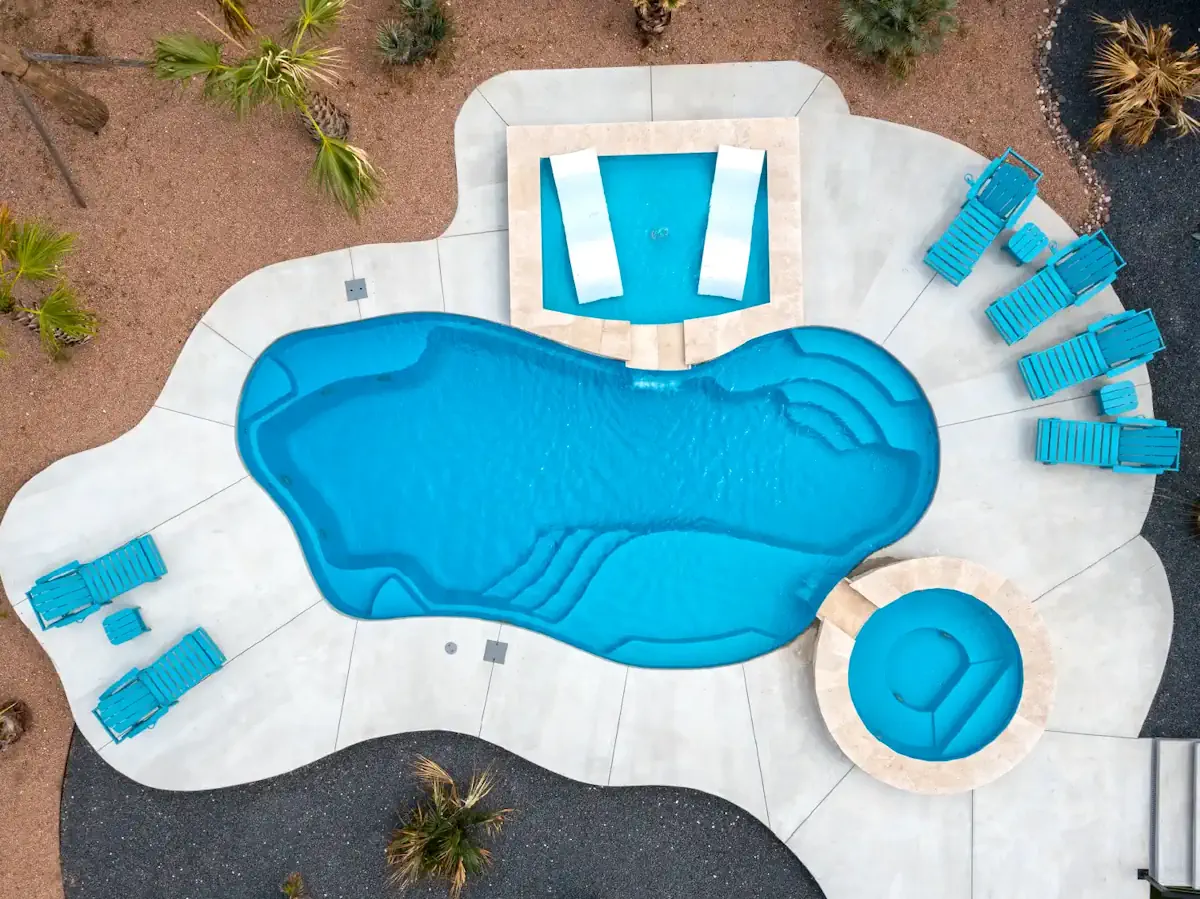
An integrated spa, which is a hot tub built into the pool structure as part of a unified installation, is one of the most significant feature decisions you’ll make during pool design. It’s also one of the decisions with the most substantial impact on how you use your outdoor space across all seasons.
What integrated spas deliver:
Year-round use that a pool alone doesn’t provide. When spring and fall temperatures make pool swimming uncomfortable, a heated spa extends outdoor use significantly. In climates with genuine winter seasons, a properly covered spa offers outdoor relaxation through months when the pool is closed entirely.
Hydrotherapy benefits that many owners find they use more consistently than the pool itself. The combination of heat, buoyancy and jet massage creates a therapeutic experience that has real wellness benefits for recovery, stress management and sleep quality.
Social configurations that pools alone don’t offer. A spa positioned adjacent to the pool with a spillover creating visual and auditory connection between the two creates a complete outdoor living environment that works for intimate evenings as well as larger gatherings.
The integration matters. A spa that’s architecturally connected to the pool, sharing a common water feature, aligned aesthetically and positioned thoughtfully relative to the pool and surrounding landscape, creates a cohesive design. A spa that feels tacked on creates a less satisfying result. Aviva’s design collection includes spa configurations specifically developed to create that seamless integration.
How Do LED Pool Lighting Systems Transform the Pool Experience?
Pool lighting is often treated as an afterthought. In practice, it’s one of the features with the most dramatic impact on how much you use your pool and how it looks from inside the house and surrounding outdoor spaces.
LED pool lighting has advanced significantly and now offers capabilities that previous generations couldn’t match:
Color capability: Modern LED systems offer millions of color combinations and programmable shows that can shift through color sequences automatically. The right lighting color transforms the pool’s visual character completely. Blue tones create a classic resort feel. Warm tones create intimacy. Color shows during entertaining create an effect that’s genuinely impressive.
Energy efficiency: LED systems use a fraction of the energy of previous incandescent or halogen systems, and they last significantly longer. The operational cost difference over the pool’s lifetime is meaningful.
Automation integration: LED lighting systems integrate with pool automation platforms, allowing control from smartphones or home automation systems. Setting scenes, scheduling lighting and adjusting from inside the house all become straightforward.
Beyond the pool itself, lighting for the surrounding hardscape, water features and landscape elements creates a cohesive nighttime environment. The pool is typically the centerpiece of that system, and the lighting design should treat it as such.
How Does Pool Color Affect the Look of Your Pool?
Pool color is one of the most personal choices you’ll make during design, and it has a bigger impact than most homeowners expect. The shell color doesn’t just sit at the bottom of the pool. It shapes the color of the water itself and sets the tone for your entire backyard.
Lighter colors, such as whites and pale blues, create bright turquoise water with a classic, tropical feel. Mid-tone blues and grays produce deeper, richer water that feels calm and sophisticated. Darker colors create a dramatic, lagoon-like effect that reflects the sky and surrounding landscape, and they tend to absorb a bit more heat from the sun.
Keep in mind that the same color can look noticeably different depending on sunlight and water depth. Your deck, landscaping and even the time of day play a role too. That’s why it’s worth seeing color samples outdoors (or better yet, a finished installation) before you decide. Your LED lighting will also interact with the shell color at night, so it’s smart to consider the two together.
Your Aviva Pools dealer can show you the available color options and help you choose one that complements your home’s exterior and the outdoor space you’re creating.
What Are Pool Automation Systems and Are They Worth It?
Pool automation transforms pool ownership from a collection of separate systems into a coordinated, easy-to-manage environment. If you’ve ever owned a pool where operating the equipment required walking to the equipment pad, adjusting separate controls for different systems and remembering which valves control which water features, you understand the appeal of automation.
Modern pool automation systems centralize control of every pool system:
Equipment control: Pump speed, filter cycles, heating systems, spa jets and water features all controlled from a single interface, typically a wall-mounted panel or a smartphone app.
Scheduling: Automated schedules that turn filtration on and off at appropriate times, manage chemical systems, pre-heat the spa before you expect to use it and adjust lighting at sunset without manual intervention.
Remote access: The ability to check pool status, adjust temperature, turn on the spa or change lighting from anywhere using a smartphone is a genuine quality-of-life improvement that pool owners who have it consistently cite as something they’d never give up.
Chemical monitoring integration: Advanced automation systems integrate with chemical monitoring equipment, providing real-time water chemistry data and alerts when attention is needed. This takes significant uncertainty out of water quality management.
The investment in automation pays returns in reduced operational complexity throughout the pool’s life. For most homeowners who add automation to their feature list, it becomes one of the decisions they’re most satisfied with.
How Should You Think About Pool Heating?
Pool heating extends your swimming season and makes the pool usable on days when unheated water would be too cool for comfortable swimming. The right heating approach depends on your climate, how you plan to use the pool and how much season extension you want to achieve.
Gas heaters provide the fastest heating capability and can raise pool temperature quickly regardless of outdoor conditions. They’re the right choice when you want to heat the pool on short notice or when you need to maintain comfortable temperatures during cooler weather. Operational costs run higher than heat pump systems, but the flexibility and speed are unmatched.
Heat pumps extract heat from the outdoor air and transfer it to the pool water. They’re significantly more energy-efficient than gas heaters in appropriate climates but work best when outdoor temperatures stay above roughly 50 degrees Fahrenheit. In climates with true cold seasons, a heat pump alone may not perform well enough during shoulder months.
Solar heating uses rooftop collectors to supplement pool temperature. It’s the lowest operational cost option but depends on solar availability and is best suited as a supplement rather than a primary heating system in most climates.
Many pool owners combine a heat pump for efficient regular use with a gas heater for backup and for heating the spa quickly. Your Aviva Pools dealer can help size and configure a heating system that matches your climate and how you plan to use the pool.
How Do You Prioritize Features for Your Lifestyle?
With so many features available, the challenge becomes prioritization. Not every feature belongs in every pool, and adding features that don’t match how you’ll actually use the pool creates cost without proportional value.
A useful framework:
Start with how you use your outdoor space now. If your current entertaining style involves large groups of neighbors and family frequently, features that facilitate social use, such as built-in seating, tanning ledges with capacity for multiple adults and water features that create ambiance, deserve priority. If your primary anticipated use is lap swimming and fitness, a rectangular pool with appropriate depth and dimensions deserves more attention than entertaining features.
Consider who uses the pool throughout its life. Children who are toddlers today become teenagers in a decade. Features that serve young children well (tanning ledges, beach entry, shallow areas) also serve adults well. Features that primarily serve a single life stage deserve more scrutiny.
Think honestly about maintenance commitment. Some features add operational complexity. Water features require additional plumbing and cleaning attention. Spas have their own chemistry management requirements. Automation systems simplify operations but have their own maintenance needs. Be honest about what level of ongoing attention fits your actual lifestyle.
Talk to people who own what you’re considering. Pool owners who have lived with specific features for several seasons have perspective that no sales conversation can fully replicate. Your Aviva Pools dealer can connect you with owners who can speak to their experience.
Frequently Asked Questions About Pool Features
Ready to Design Your Ideal Pool?
The features that make a pool exceptional are the features that match how you live, not the longest feature list or the most impressive amenities in isolation, but the right combination of elements for your lifestyle, your property and the experience you want to create.
Aviva Pools’ design collection and dealer network provide the combination of manufacturing quality and local expertise that turns feature decisions into genuinely outstanding results.
Explore Aviva Pools designs | Find an Aviva Pools dealer near you
Next steps:
Explore designs: Browse Aviva Pools’ complete design collection to see how features integrate into specific pool shapes and configurations.
Schedule a consultation: Connect with a certified Aviva Pools dealer to discuss which features make sense for your property and lifestyle.
Visit a showroom or model installation: Seeing features in person, particularly tanning ledges, bench seating configurations and water features, changes how you think about them compared to photographs. Speak to your local Aviva Pools dealer to learn more about this opportunity.
Contact a local Aviva Pools dealer today to begin designing your ideal pool.


